
Flores Hardwood Supply Chains: Where LBJ Builders Source Timber
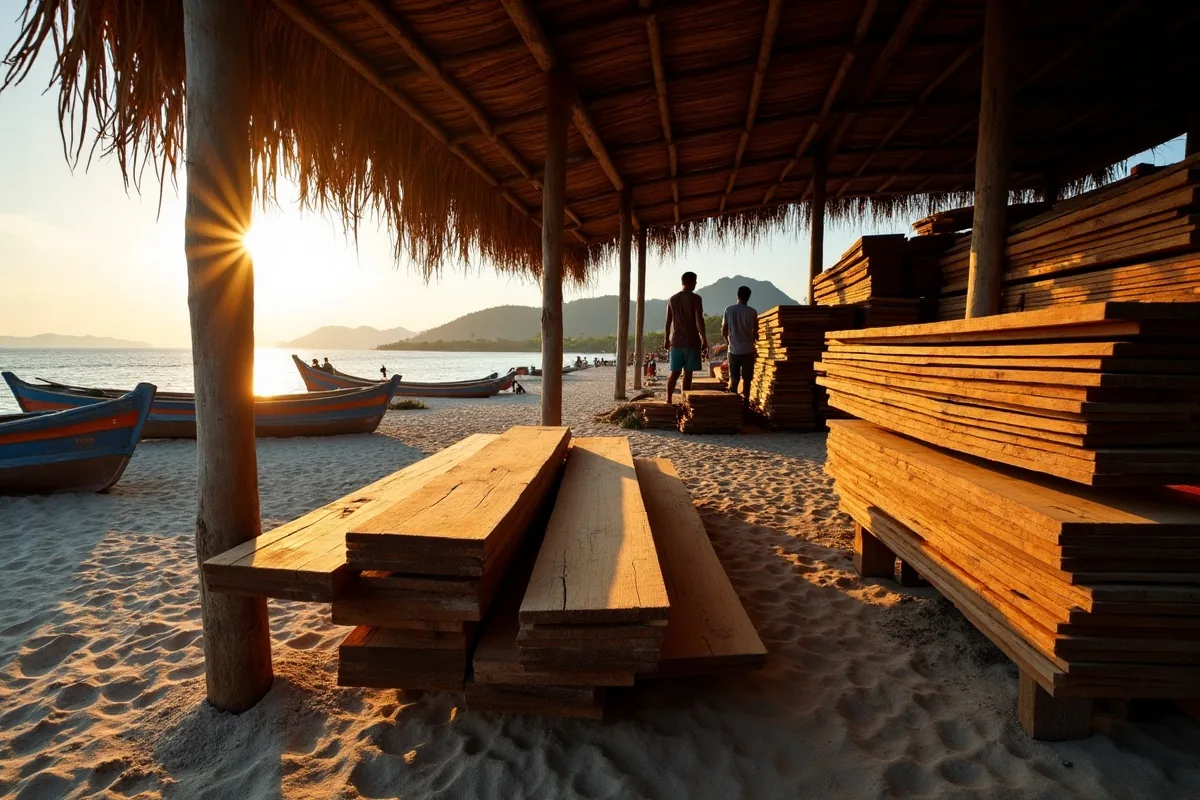
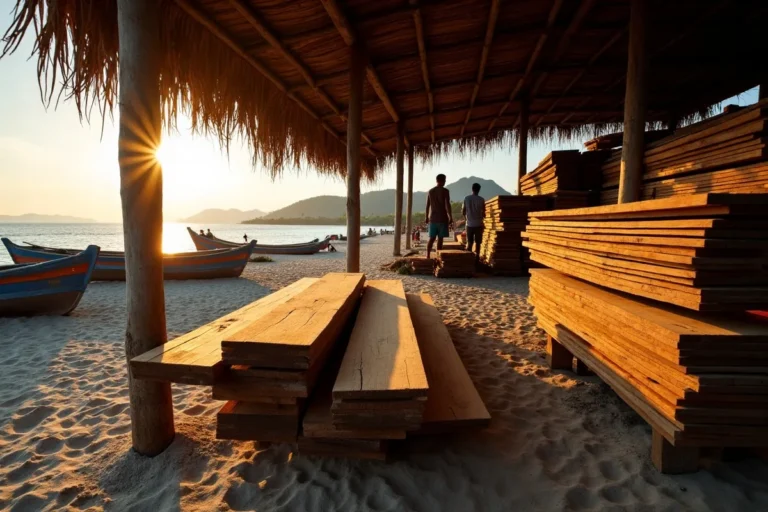
Labuan Bajo builders source structural hardwood through three supply corridors: ironwood (ulin) and bangkirai shipped by barge from Kalimantan, teak and keel-grade timbers trucked and ferried from Java and Sulawesi, and a smaller certified stream of plantation teak that arrives already sawn. No commercial boat timber is logged on Flores itself — the island supplies labour and finishing skill, not the forest.
By Labuan Bajo Boat Builders Build Desk — Yard Desk, Labuan Bajo Boat Builders. Updated August 2026.
Ask any foreman on the waterfront what decides a hull’s lifespan and the answer is the same: the wood that went into it, and how honestly it was dried. This guide maps where the timber that becomes a Labuan Bajo phinisi actually comes from, who controls each link in the chain, and what an owner should demand in writing before the first keel plank is cut. It pairs well with our earlier deep-dive on choosing the best timber for your phinisi.
The Three Corridors Feeding LBJ Yards
The first and most important corridor runs from South and East Kalimantan. Ulin — Borneo ironwood — remains the reference material for keels, stems and below-waterline structure because it shrugs off marine borers that destroy softer species. It moves by timber barge to Surabaya or directly east through Makassar, then on smaller inter-island vessels to Flores. The second corridor brings teak from Java, most of it Perhutani-managed, used for decks, superstructure and joinery where dimensional stability matters more than raw density. The third corridor is Sulawesi’s own network around Bulukumba, where generations of Konjo builders maintain relationships with sawmills that understand boat-grade cuts — a world we described in how a phinisi is built without blueprints.
Who Actually Controls the Chain
Between forest and yard sit four gatekeepers. Licensed concession holders fell and grade the logs. Regional sawmills convert them to boat dimensions — and this is where most quality is won or lost, because a mill that saws for furniture will happily deliver crown-cut planks that twist on a hull. Timber traders in Surabaya and Makassar consolidate loads and handle SVLK legality documents. Finally, the yard’s own timber boss inspects on arrival, rejects what fails moisture and grain checks, and stickers the accepted stock for further air-drying in the yard. A serious Labuan Bajo yard will show you this paper trail without being asked; it is one of the checks we formalise in our build process.
Legality: SVLK Papers Are Not Optional
Indonesia’s timber legality system (SVLK) certifies that wood was harvested from a licensed concession and moved with documents at every transfer. For an owner, the practical rule is simple: every cubic metre of structural timber in your build should be traceable to an SVLK certificate, and the yard should archive copies in your project file. This matters beyond ethics — vessels that later seek international classification, foreign flag registration or marine insurance will be asked where the hull timber came from. A build documented from day one, as we do for every project in our yard portfolio, sails through those questions.
What Timber Costs in 2026
Prices move with barge schedules and season, but USD planning bands hold steady enough to budget. Boat-grade ulin lands in Labuan Bajo at roughly USD 1,400–1,900 per cubic metre depending on section sizes; keel baulks at the top of that band. Perhutani teak for decking and joinery runs USD 1,100–1,600 per cubic metre in the grades a yard will accept. Bangkirai for frames and stringers sits lower, around USD 700–950. A 30-metre phinisi consumes 90–130 cubic metres of mixed species, which is why timber alone typically represents a fifth to a quarter of hull cost — a share we break down further in our 2027 cost breakdown.
Drying: The Invisible Quality Gate
Flores humidity hovers near 80 percent in the wet season, so “dry” timber from a barge is rarely dry enough. Good yards re-sticker arriving stock under ventilated roofs for eight to sixteen weeks and check moisture content before any plank meets a frame. Rushing this step is the root cause of half the caulking failures we are asked to repair on vessels built elsewhere. When you tour a yard — and you should, ideally during an owner visit scheduled around key milestones — walk the timber stacks first. Orderly stickers, shade, airflow and species labels tell you more about the yard’s discipline than any brochure.
Further Reading From the Yard Desk
- Barge logistics: moving materials to Labuan Bajo yards
- Steel options in Labuan Bajo: when metal beats timber
- Eco-build practices in Flores yards
Talk to the Yard Desk
Our yard desk answers build enquiries seven days a week from Labuan Bajo. Message us on WhatsApp at +62 811-3941-4563 or write to [email protected] and we will reply with slot availability, reference projects and a realistic budget band. You can also review our pricing guide or start with the step-by-step build process.
Frequently Asked Questions
Does any boat timber come from Flores forests?
No commercial volume. Flores forests are largely protected or community-managed, and none produce marine-grade hardwood at scale. Every serious yard imports structural timber from Kalimantan, Java or Sulawesi with SVLK legality papers, then dries and grades it locally before use.
Is ulin still legal to buy for boat building?
Yes, from licensed concessions with SVLK documentation, though supply tightens each year and lead times of two to four months for keel-grade baulks are normal. Reputable yards order ulin against a signed contract rather than holding speculative stock, so early timber deposits shorten your schedule.
Can plantation teak replace old-growth species structurally?
For decks, houses and interior joinery, absolutely. For keels and below-waterline structure, plantation teak lacks the density and borer resistance of ulin or dense bangkirai, so mixed-species specification remains the standard approach in every Labuan Bajo build we deliver.
How do I verify the timber in my build is what I paid for?
Require three things in your contract: SVLK certificates per delivery, species and moisture inspection reports signed by the yard’s timber master, and the right to independent verification during construction. Email [email protected] and we will share a sample timber annex from a live project.
Keep Reading
Uncategorized
Komodo Yacht Charter: How Seasons Shape Boat Design 2026
Komodo's charter year is really two seasons: dry southeast trade winds from roughly May to September, and a wetter, swell-prone…
Market Outlook
2027 Labuan Bajo Build Outlook: Demand From the Park Economy
The 2027 outlook for Labuan Bajo building is demand-heavy and capacity-bound: park visitation keeps climbing, the day fleet is renewing…
Market Outlook
Pricing an LBJ Build: Local Labour, Imported Systems
A Labuan Bajo build price is two economies stitched together: local labour and timber — the hull economy, where this…