

Barge Logistics: Moving Materials to Labuan Bajo Yards
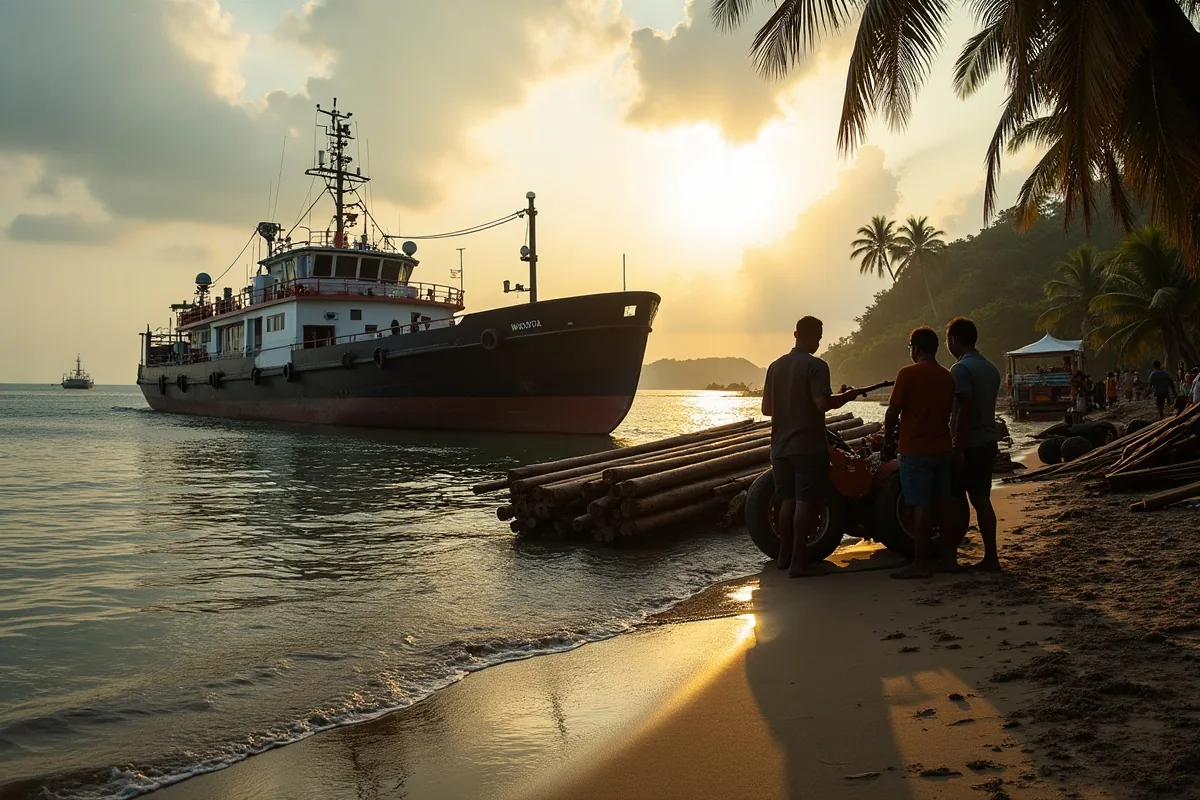
Almost everything inside a Labuan Bajo build arrives by sea. Hardwood rides timber barges from Kalimantan via Surabaya or Makassar; engines, tanks, glass and systems travel as consolidated cargo on inter-island freighters to Labuan Bajo’s commercial pier; and the last kilometres to a beach yard are covered by landing craft, small trucks and, at the water’s edge, human muscle. Understanding this chain — and its lead times — is the difference between a schedule and a wish.
By Labuan Bajo Boat Builders Build Desk — Yard Desk, Labuan Bajo Boat Builders. Updated August 2026.
Flores makes brilliant boats and almost none of their ingredients. That single fact shapes budgets, contracts and calendars more than any other logistics reality here. This guide walks the material journey end to end, so owners can read a yard’s procurement plan the way a surveyor reads a hull — and it slots directly into the master schedule we lay out in keel to launch: a realistic timeline.
The Trunk Routes
Two maritime corridors feed the yards. From Surabaya, weekly cargo services carry containerised and break-bulk freight east through the Lesser Sundas, landing at Labuan Bajo’s pier in four to seven sailing days. From Makassar, a shorter hop brings Sulawesi timber, hardware and crews. Timber itself often moves on dedicated barges — slow, tide-tolerant, able to nose onto a beach — a journey we traced species by species in the hardwood supply-chain guide. Heavy singles such as main engines and generators ship as project cargo and are craned onto trucks at the pier.
The Last Mile Is the Hard Mile
The pier-to-yard leg looks trivial on a map and dominates real planning. Northern beach yards — located in our build-yards map — are reached by a coastal road that narrows with every kilometre, so anything oversized transfers to a landing craft that beaches beside the build site at high tide. A 6-tonne engine crossing a beach requires timber skids, rollers, twenty men and tide timing; yards that do this routinely make it look casual, and yards that do not can damage in an hour what took a season to earn. Ask any candidate yard to describe their last engine landing in detail — it is a better reference than a brochure, and exactly the operational discipline documented across our portfolio.
Lead Times to Plan Around
Working figures that hold in normal months: consolidated hardware from Surabaya, two to three weeks door to yard; keel-grade ulin from Kalimantan, eight to sixteen weeks from order to beach; a new marine diesel from a Jakarta or Singapore distributor, eight to twenty weeks depending on model; imported systems (watermakers, navigation electronics, air-conditioning) four to twelve weeks plus customs. The monsoon stretches everything — barge masters wait out squall systems, as covered in scheduling around the Flores monsoon — so December-to-March deliveries carry an honest two-week buffer.
What Freight Really Costs
Budget in USD bands rather than fantasising precision. Consolidated general cargo from Surabaya lands at roughly USD 90–140 per cubic metre; timber barge freight adds USD 120–180 per cubic metre of hardwood landed on the beach; project-cargo lifts for engines and generators run USD 800–2,500 per piece including craneage and the landing-craft shuttle. On a 35-metre build, total inbound logistics typically settles between four and seven percent of project cost — a line item we insist appears explicitly in quotations, as our pricing guide explains, because burying it is how low headline quotes are manufactured.
How Good Yards De-Risk the Chain
Three habits mark a logistics-mature builder. Orders are placed against the build programme with written lead times, not when a foreman notices a shortage. Critical-path items — keel timber, main engines, shaft lines — are tracked weekly with suppliers, the discipline behind our stage-gated build process. And every delivery is received against a manifest with photographs, so disputes about damage or shortfall are settled by record rather than memory. When you compare quotes, weigh these habits as heavily as the number — a theme that continues in building in LBJ vs ordering from Sulawesi.
Talk to the Yard Desk
Our yard desk answers build enquiries seven days a week from Labuan Bajo. Message us on WhatsApp at +62 811-3941-4563 or write to [email protected] and we will reply with slot availability, reference projects and a realistic budget band. You can also review our pricing guide or start with the step-by-step build process.
Frequently Asked Questions
Why not truck materials across Flores instead?
The Trans-Flores highway serves people admirably and project cargo poorly: mountain switchbacks, weight-limited bridges and ten-hour stages make sea freight both safer and less expensive for anything heavy or long. Road freight fills gaps for urgent small items only.
Can owners ship their own equipment to the build?
Yes — owner-supplied engines, electronics and interior fittings are common. We consolidate them through our Surabaya agent, handle customs and receive them against your project manifest. Start that conversation early via [email protected] so lead times enter the build programme.
What is the single most schedule-critical delivery?
Keel and stem timber. Nothing else can start until it lands, and its supply chain — concession, mill, barge, beach — is the longest in the project. We order it at contract signature for precisely this reason.
Do deliveries stop in the monsoon?
They slow rather than stop. Barge masters wait out weather systems, so December–March legs need buffer. A yard that schedules coatings and deliveries around the monsoon — rather than through it — will hold its dates.
Keep Reading
Yard Operations
Eco-Build Practices in Flores: Low-Impact Yards Near Komodo
Low-impact boatbuilding in Flores rests on five practices: fully documented legal timber, captured and removed hazardous waste, low-VOC coating systems…

Yard Operations
Building Beside a National Park: Rules That Shape LBJ Yards
Every yard in Labuan Bajo operates in the shadow of a UNESCO-listed national park, and that changes how boats get…
Yard Operations
Mapping Labuan Bajo’s Build Yards: Who Works Where
Labuan Bajo’s building capacity is not one shipyard but a string of yard sites along roughly twenty kilometres of coast:…