
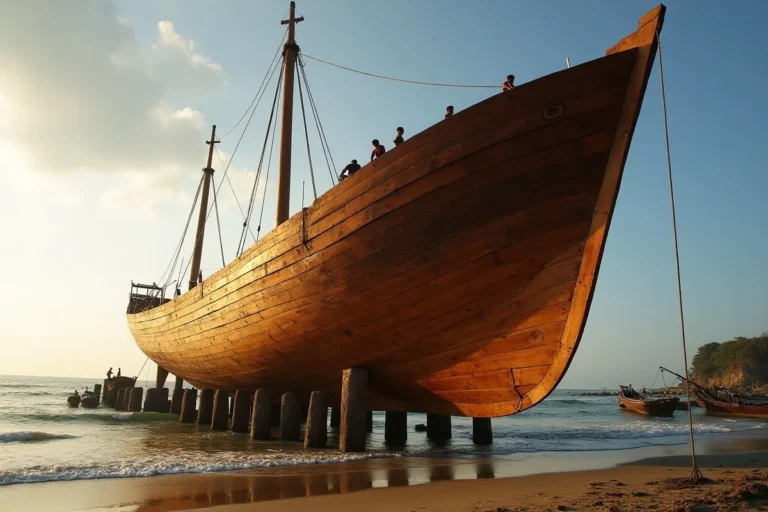
Keel to Launch in Labuan Bajo: A Realistic Local Timeline
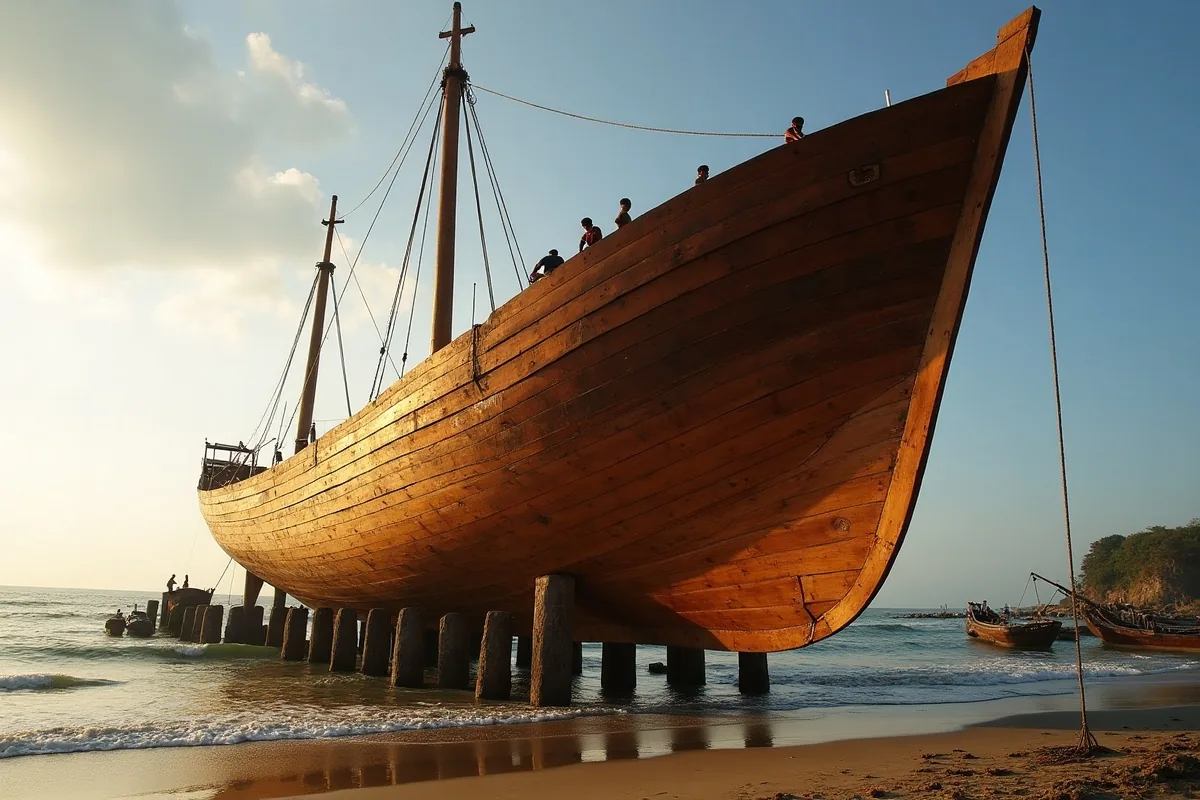
A realistic Labuan Bajo timeline for a 30–40 metre timber vessel runs 18 to 30 months from keel-laying to handover: two to four months for keel and backbone, five to eight for framing and planking, three to five for decks and superstructure, four to seven for systems and interior fit-out, and two to three for coatings, launch, commissioning and sea trials. Smaller day boats compress to 8–14 months; anyone quoting a 40-metre phinisi in under 18 months is quoting hope.
By Labuan Bajo Boat Builders Build Desk — Yard Desk, Labuan Bajo Boat Builders. Updated August 2026.
Schedule is the question every owner asks first and the one most yards answer least honestly. This is the phase-by-phase reality on this coast — what each stage contains, what it depends on, and where time hides. Read it beside scheduling around the Flores monsoon, because the calendar here has weather written into it.
Phase One: Keel and Backbone (Months 1–4)
The build begins before the beach: keel-grade ulin is the longest-lead item in the project, ordered at signature through the corridors mapped in our timber supply guide. Once landed, the keel is scarfed, the stem and sternpost raised, and the backbone faired — ceremonially opened, in most yards, with the rites described in our craft-culture piece. Time hides here in timber delivery, which is why this phase spans two months when stock is ready and four when it is not.
Phase Two: Frames and Planking (Months 4–12)
Frame by frame, the hull’s skeleton rises, followed by planking — the most labour-intensive stage and the one most visible to a visiting owner. Crew size decides pace: a twelve-man hull team moves a 35-metre hull through this phase in six months; the same hull with six men takes eleven. This is the phase to visit — see making an owner visit count — because planking quality is inspectable in a way no photograph conveys.
Phase Three: Decks and Superstructure (Months 10–16)
Deck beams, laid decks, houses and bulwarks overlap the tail of planking. Design decisions frozen here — window lines, headroom, tender stowage — are cripplingly expensive to revisit later, which is why our stage-gated process locks general arrangement before frame thirty. For the day-boat classes serving the park — profiled in hull classes LBJ yards deliver — this phase is proportionally shorter and often runs concurrent with engine installation.
Phase Four: Systems and Interior (Months 14–24)
Engines land on their beds, shafts are aligned, tanks plumbed, electrical looms pulled, and the joinery teams take over the accommodation. This phase decides whether the vessel is a boat or a business: charter-spec plumbing, holding tanks and safety systems installed now clear park permitting later, the pipeline described in how LBJ builds enter Komodo service. For owners comparing a full local build against importing a bare hull for fit-out, the trade-offs live in LBJ vs Sulawesi and why LBJ finishing saves delivery legs.
Phase Five: Coatings, Launch and Trials (Months 20–30)
Fairing, antifouling and topside systems need dry-season windows; then comes launch day — tide-assisted, communal, and worth attending for the ceremony alone, as launch ceremonies of Flores shows. Commissioning and sea trials close the project: engines proven at load, systems run in anger, snags listed and cleared. Owners who want the full-service version of this path — from design to trials under one management — can study our custom phinisi build programme, which walks a hull through exactly this sequence under one accountable desk.
Where Schedules Actually Die
Post-mortems on late builds repeat five causes: timber ordered late, undersized crews split across too many hulls, design changes after planking, monsoon-exposed coating windows, and payment disputes that stop work. Every one is preventable in the contract — milestone payments, named crew minimums, change-order pricing, weather allowances — the checklist we expand in what to look for in a building contract.
Reading a Yard’s Programme
Ask every candidate yard for their last completed project’s planned-versus-actual timeline. A serious builder produces it in a day and talks you through the slippages without flinching; the pattern of where their weeks were lost — and recovered — is the most truthful schedule forecast you will ever get for your own build.
Talk to the Yard Desk
Our yard desk answers build enquiries seven days a week from Labuan Bajo. Message us on WhatsApp at +62 811-3941-4563 or write to [email protected] and we will reply with slot availability, reference projects and a realistic budget band. You can also review our pricing guide or start with the step-by-step build process.
Frequently Asked Questions
How long does a 40-metre phinisi take in Labuan Bajo?
Plan 24–30 months keel to handover with a properly crewed yard, two dry seasons and disciplined procurement. Twenty months is achievable only with covered space and perfect timber timing; under eighteen is not a schedule, it is a sales pitch.
What is the fastest vessel class to build here?
Open and semi-enclosed day boats for the park trade: eight to fourteen months depending on specification, because hull volume is smaller and systems simpler. Our day-trip hull-classes guide details the classes and their timelines.
Can I compress the schedule by paying more?
Modestly. Money buys crew, covered space and expedited freight, which together trim ten to twenty percent from a phase plan. It cannot buy dry-season coating windows or shorten timber growth. Beware quotes where the schedule shrank but the crew list did not grow.
When should I be on site during the build?
Four visits earn their airfare: keel-laying, mid-planking, pre-interior systems review, and launch with trials. Message +62 811-3941-4563 and the yard desk will map visit windows onto your project programme.
Keep Reading
Boat Construction
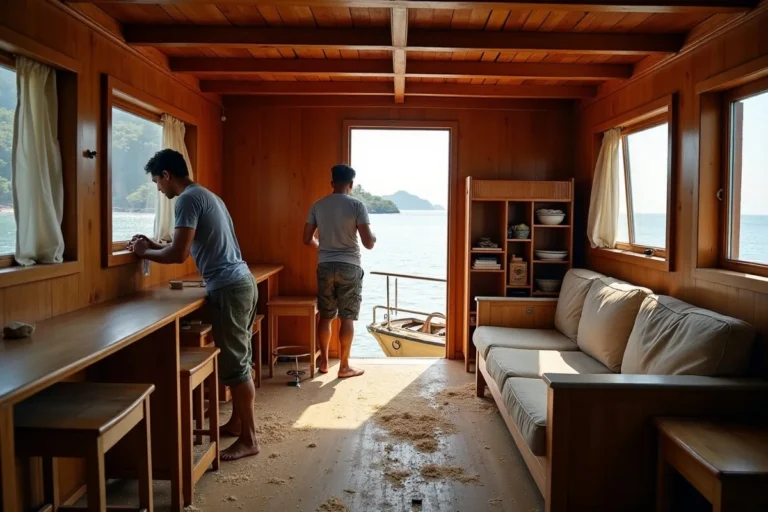
Fitting Out Near the Fleet: Why LBJ Finishing Saves Delivery Legs
Every vessel finished in Labuan Bajo saves at least one delivery passage — and usually the most expensive one, the…
Boat Construction
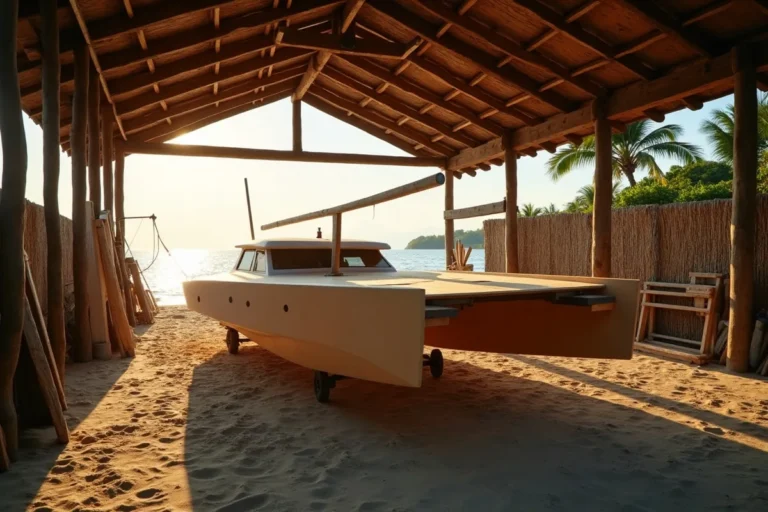
Small Catamaran Builds in Labuan Bajo: A Niche Taking Shape
A catamaran-building niche is taking real shape in Labuan Bajo: day-charter platforms of 12–18 metres and small cruising cats to…
Boat Construction
Owner Visits During an LBJ Build: Making the Trip Count
Four well-timed visits do more for build quality than forty phone calls: keel-laying to set the relationship and witness the…