
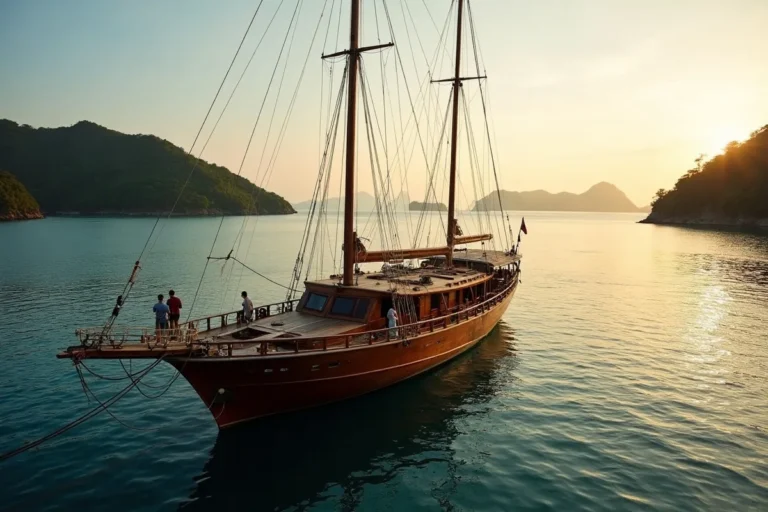
Yard-to-Fleet Pipelines: How LBJ Builds Enter Komodo Service
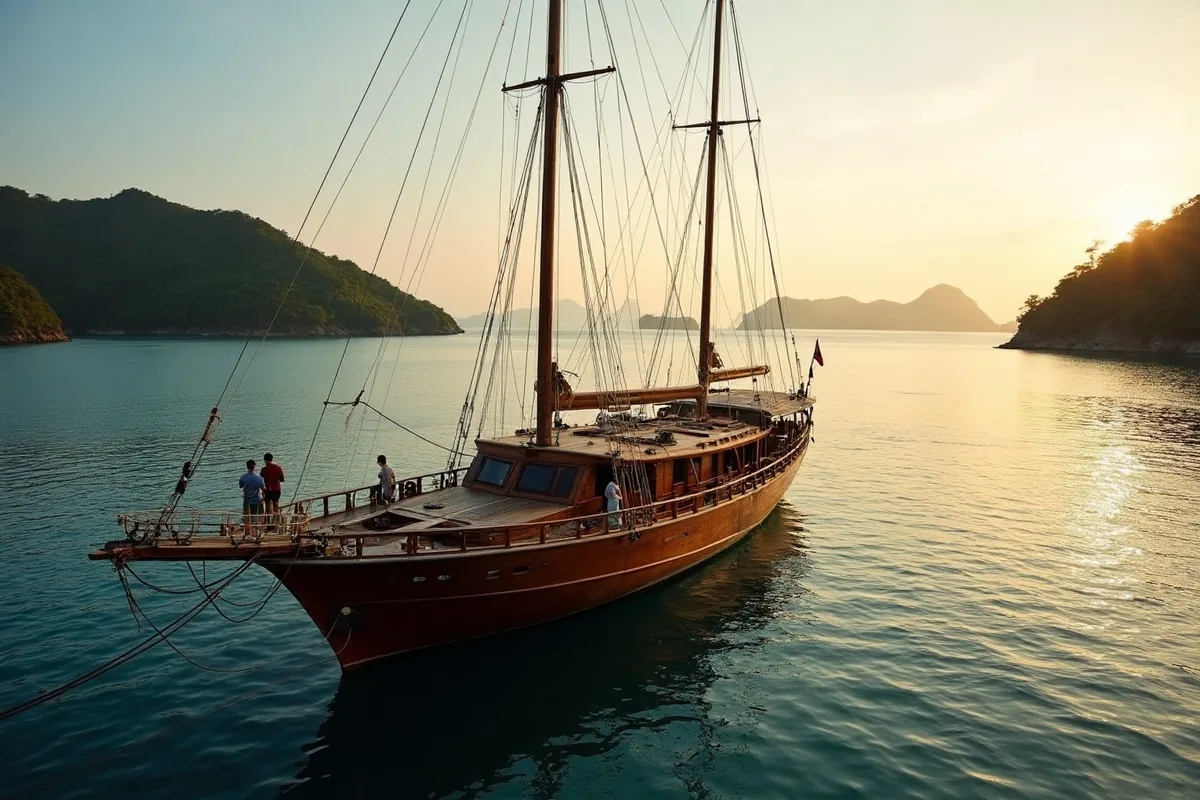
A Labuan Bajo build enters Komodo service through a five-stage pipeline: flag and survey documentation at launch, park operating permits, crew recruitment and certification, distribution — the agents, platforms and direct channels that actually sell trips — and a management model that runs the vessel day to day. Builds managed by park-experienced teams clear this pipeline in six to ten weeks; unmanaged builds routinely lose a season to it.
By Labuan Bajo Boat Builders Build Desk — Yard Desk, Labuan Bajo Boat Builders. Updated August 2026.
The gap between a launched boat and an earning boat is where naive projects go quiet. The hull was the visible challenge; the pipeline into revenue is the invisible one. This article maps that pipeline stage by stage — the operational sequel to build in Labuan Bajo, earn in Komodo — so owners can plan the launch-to-first-charter window as deliberately as the build itself.
Stage One: Papers at Launch
Indonesian flag registration, tonnage measurement, safety certification scaled to passenger count, radio licensing: the document set every commercial vessel needs before a single guest steps aboard. The efficient path starts during the build — measurement while structure is open, safety equipment installed to survey positions rather than retrofitted — which is why our stage-gated process runs the paperwork track parallel to carpentry from keel-laying, and why trials in the commissioning phase double as survey evidence.
Stage Two: Park Permits
Komodo operating permissions sit on top of national papers: vessel standards, guide arrangements, entrance and activity fee systems, mooring discipline. The design-for-compliance argument of building beside a national park pays its dividend here — vessels built to park expectations pass inspection on first presentation, while retrofit candidates enter the queue-fix-requeue cycle that consumes weeks each pass. Class matters too: the requirements differ meaningfully across the day-boat classes and liveaboard tiers.
Stage Three: Crew
Komodo’s crew market is tight in high season and personal all year: captains who know the park’s moorings and ranger protocols, engineers who can nurse a generator at anchor, hosts who turn a schedule into an experience. Recruiting starts sixty days before launch, not after it. A structural advantage of building here — argued throughout the 2027 outlook — is that yard crews, sea-trial hands and delivery skippers form a natural hiring pool who already know your vessel plank by plank.
Stage Four: Distribution
Boats do not sell trips; channels do. The working mix for a new Komodo vessel is layered: local agents and hotel desks for day products, online travel platforms for reach, direct social and web presence for margin, and — for liveaboards — the international charter brokers who book season blocks. New entrants underestimate how relationship-driven the top of this funnel is; established operators’ service networks exist precisely to bridge it, and owners evaluating that route can study how hulls are fitted out beside the working fleet to see what that bridge looks like in practice.
Stage Five: The Management Decision
Owner-operation, hybrid management or full management — the honest choice depends on your distance from the park and appetite for 5 a.m. phone calls. Owner-operators keep margin and carry every operational risk personally; management models trade percentage for professional operations, maintenance discipline and channel access. Whichever model you choose, write the maintenance calendar into it from day one: the first-service haul-out and defect window covered in warranty culture in Flores yards is where new vessels are kept honest, and skipping it to chase early bookings is the most expensive saving in the fleet. Budget the pipeline itself in USD terms — papers, permits, crew ramp and initial marketing typically absorb USD 15,000–40,000 before first revenue, a line our build pricing guide insists on showing.
The First Hundred Days Afloat
Treat the first hundred days of service as the pipeline’s final stage rather than the business’s first. Crews are still learning the vessel’s habits, systems are inside their infant-mortality window, and reviews written in these weeks will follow the boat for years. The disciplined pattern: soft-launch with familiarisation trips and invited guests, hold the first-service haul-out date sacred whatever the booking pressure, and log every snag into a single list the yard clears in one visit. Vessels run this way enter their first high season proven; vessels rushed straight to full schedules spend that season improvising.
Talk to the Yard Desk
Our yard desk answers build enquiries seven days a week from Labuan Bajo. Message us on WhatsApp at +62 811-3941-4563 or write to [email protected] and we will reply with slot availability, reference projects and a realistic budget band. You can also review our pricing guide or start with the step-by-step build process.
Frequently Asked Questions
How long from launch to first paying charter?
Six to ten weeks with the pipeline run professionally and paperwork started during the build; three to six months when documentation begins at launch. The variance is process, not luck — every week of it was preventable in the build contract.
Can a foreign owner operate a charter vessel in Komodo?
Foreign owners typically operate through Indonesian corporate structures or management partnerships that hold the relevant licences. The structuring decision belongs before the build contract, not after launch — it affects registration, tax and permit pathways.
What does professional vessel management cost?
Full management in this market generally runs 15–25 percent of charter revenue depending on scope — operations, crew, maintenance, marketing — with hybrid models below that. Model it against realistic occupancy, not brochure occupancy.
Does the yard help with fleet entry?
Ours does — papers, permits, crew introductions and channel partnerships are part of the handover package. Message the yard desk on +62 811-3941-4563 for the launch-to-revenue checklist we run on every delivery.
Keep Reading
Market Outlook
Pricing an LBJ Build: Local Labour, Imported Systems
A Labuan Bajo build price is two economies stitched together: local labour and timber — the hull economy, where this…
Market Outlook
2027 Labuan Bajo Build Outlook: Demand From the Park Economy
The 2027 outlook for Labuan Bajo building is demand-heavy and capacity-bound: park visitation keeps climbing, the day fleet is renewing…
Market Outlook
Building in LBJ vs Ordering From Sulawesi: A Buyer’s Trade-Off
The honest trade-off: Bulukumba and the Sulawesi yards offer deeper hull-building capacity and headline prices typically 10–20 percent lower; Labuan…