
Eco-Build Practices in Flores: Low-Impact Yards Near Komodo
Low-impact boatbuilding in Flores rests on five practices: fully documented legal timber, captured and removed hazardous waste, low-VOC coating systems applied over sealed ground, offcut and sawdust reuse instead of open burning, and designs that reduce the vessel’s lifetime footprint in the park it will serve. None of these are exotic; all of them are inspectable on a single yard visit.
By Labuan Bajo Boat Builders Build Desk — Yard Desk, Labuan Bajo Boat Builders. Updated August 2026.
Building beside a UNESCO-listed marine park is a privilege with obligations attached — the regulatory side of which we covered in rules that shape LBJ yards. This article covers the voluntary side: the workshop habits that separate genuinely low-impact yards from those that merely photograph well, and the specifications owners can write into a contract to make good practice enforceable.
Legal Timber Is the Foundation
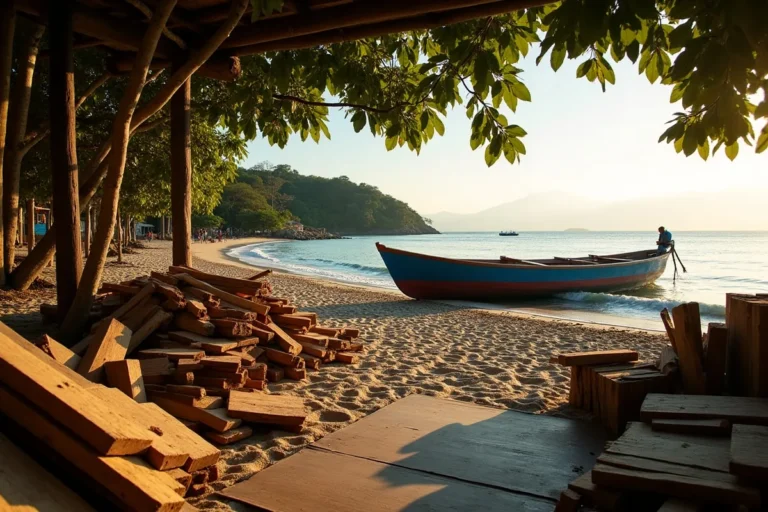
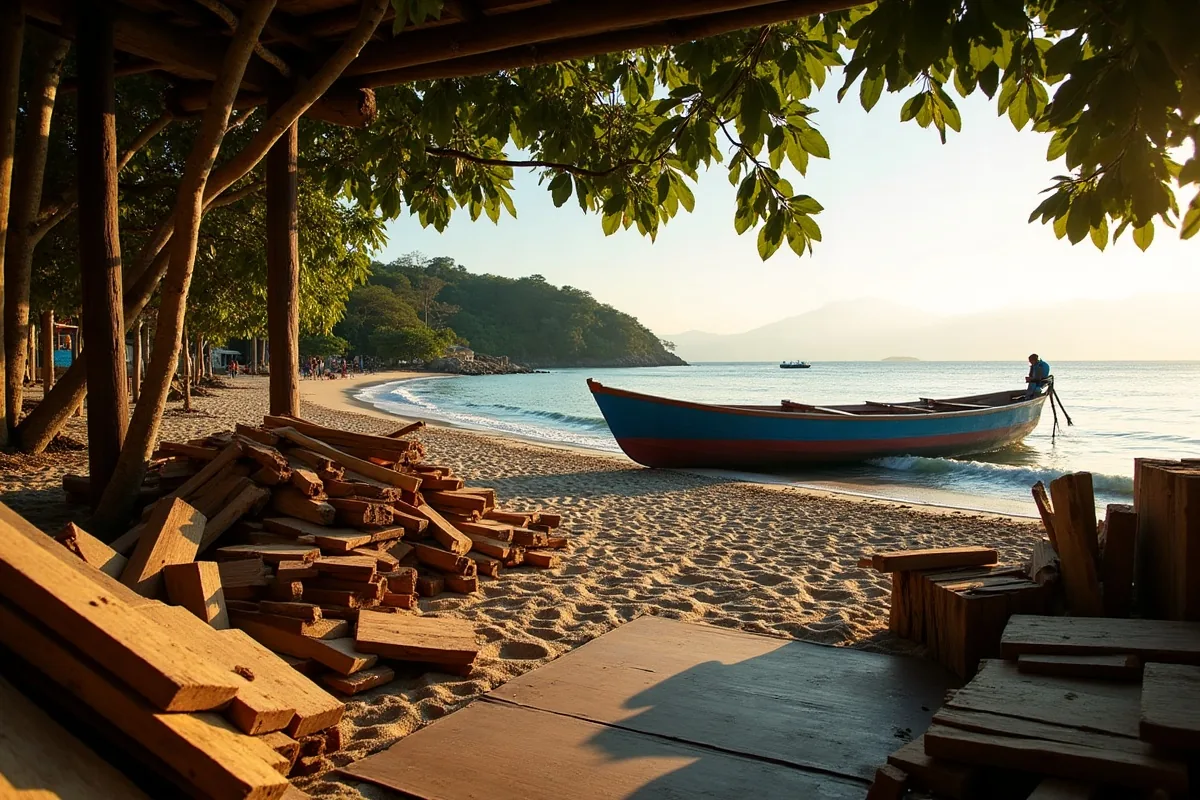
No eco-claim survives illegal wood. SVLK-documented hardwood from licensed concessions — the chain traced in our supply-chain guide — is the non-negotiable first practice, and the paperwork should live in your project file, not the yard’s drawer. The deeper practice is yield discipline: careful nesting of cuts, scarfing shorter stock into serviceable lengths, and species-matching so dense old-growth timber is spent only where structure demands it. A yard’s offcut pile tells the story — small, sorted and destined for reuse is the right answer.
Waste Capture at the Waterline
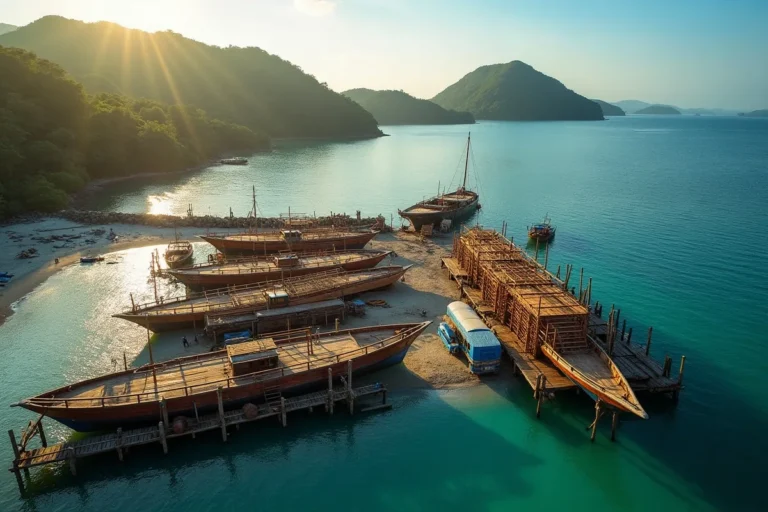
The workshop practices that matter most sit closest to the water. Hull sanding over ground sheets with collected dust; antifouling residue swept and drummed, never tide-washed; solvents, oils and filters stored in bunded drums and barged out to licensed processors; batteries and electrical waste segregated. These habits cost little and signal everything — when we audit partner sites for the projects in our portfolio, the waste corner is the first stop, before any hull.
Coatings: The Chemistry Choice
Modern low-VOC and water-based primers, silicone-based foul-release systems and copper-reduced antifoulings all now have tropical-proven options. They demand stricter application windows — which is why coating scheduling belongs inside the monsoon-aware build calendar — but they cut both applicator exposure and leachate into the bay. Owners should specify the coating system by name in the contract and require batch records at handover, exactly as classification surveyors do.
Design Decisions That Outlast the Build
The largest environmental lever is the vessel itself. Holding tanks sized for real itineraries rather than minimum compliance; generator arrangements with sound shields and night-silent battery banks; LED lighting and inverter architecture that shrink fuel burn; hull lines drawn for efficient displacement speeds rather than brochure top speed. These choices, standard in our custom phinisi builds, decide what the boat asks of Komodo’s anchorages for the next thirty years — a horizon the wider market increasingly rewards, as the rise of eco-friendly phinisi documents.
Writing It Into the Contract
Good intentions become practice when they become clauses. Four lines do most of the work: all structural timber SVLK-documented with copies to owner; hazardous waste removed by licensed carrier with receipts; coating systems as specified, applied per manufacturer data sheets with records; no open burning of treated timber on site. Add a right of inspection — unannounced, reasonable hours — and you have an enforceable eco-spec in under a page. For how these standards continue into charter operation, see how LBJ builds enter Komodo service.
Measuring What You Cannot See
Low-impact practice improves fastest when it is measured. The simplest yard metrics cost nothing to keep: cubic metres of timber purchased against cubic metres in the finished structure, which exposes waste; litres of solvent and coating bought against litres returned as residue drums, which exposes leakage; and a monthly photographic record of the waste corner, which exposes drift before it becomes habit. We publish these figures to owners in the routine build reports, because a number reported monthly disciplines a workshop more effectively than a policy laminated on a wall. Owners comparing yards should ask for last quarter’s figures — the speed and comfort of the answer is itself the audit.
Talk to the Yard Desk
Our yard desk answers build enquiries seven days a week from Labuan Bajo. Message us on WhatsApp at +62 811-3941-4563 or write to [email protected] and we will reply with slot availability, reference projects and a realistic budget band. You can also review our pricing guide or start with the step-by-step build process.
Frequently Asked Questions
Does eco-specification make a build more expensive?
Marginally at contract, meaningfully at resale. Documented timber, captured waste and named coating systems add low single-digit percentages to cost, while a verifiable eco-file increasingly commands a premium from charter partners and buyers operating in protected waters.
Are traditional wooden boats environmentally sound?
A well-built timber hull is one of the lowest-embodied-carbon large structures afloat: its primary material grew on sunlight and stores carbon for the vessel’s life. The footprint questions are sourcing legality, waste handling and operating systems — all controllable in the build.
Can reclaimed timber be used in a new build?
Selectively. Reclaimed ulin and teak from demolished structures serve well in interior joinery and non-structural fit-out, with provenance documented. For keels and frames we specify fresh certified stock, because structural history in reclaimed baulks cannot be verified.
How do I verify a yard’s practices before signing?
Visit unannounced if you can, walk timber stacks and the waste corner, and ask for last quarter’s waste-removal receipts. Or ask us to arrange an audited tour — write to [email protected] and the yard desk will schedule it.
Keep Reading
Yard Operations
Barge Logistics: Moving Materials to Labuan Bajo Yards
Almost everything inside a Labuan Bajo build arrives by sea. Hardwood rides timber barges from Kalimantan via Surabaya or Makassar;…
Yard Operations
Building Beside a National Park: Rules That Shape LBJ Yards
Every yard in Labuan Bajo operates in the shadow of a UNESCO-listed national park, and that changes how boats get…
Yard Operations
Mapping Labuan Bajo’s Build Yards: Who Works Where
Labuan Bajo’s building capacity is not one shipyard but a string of yard sites along roughly twenty kilometres of coast:…