

The Flores Apprentice Path: Training the Next Yard Generation
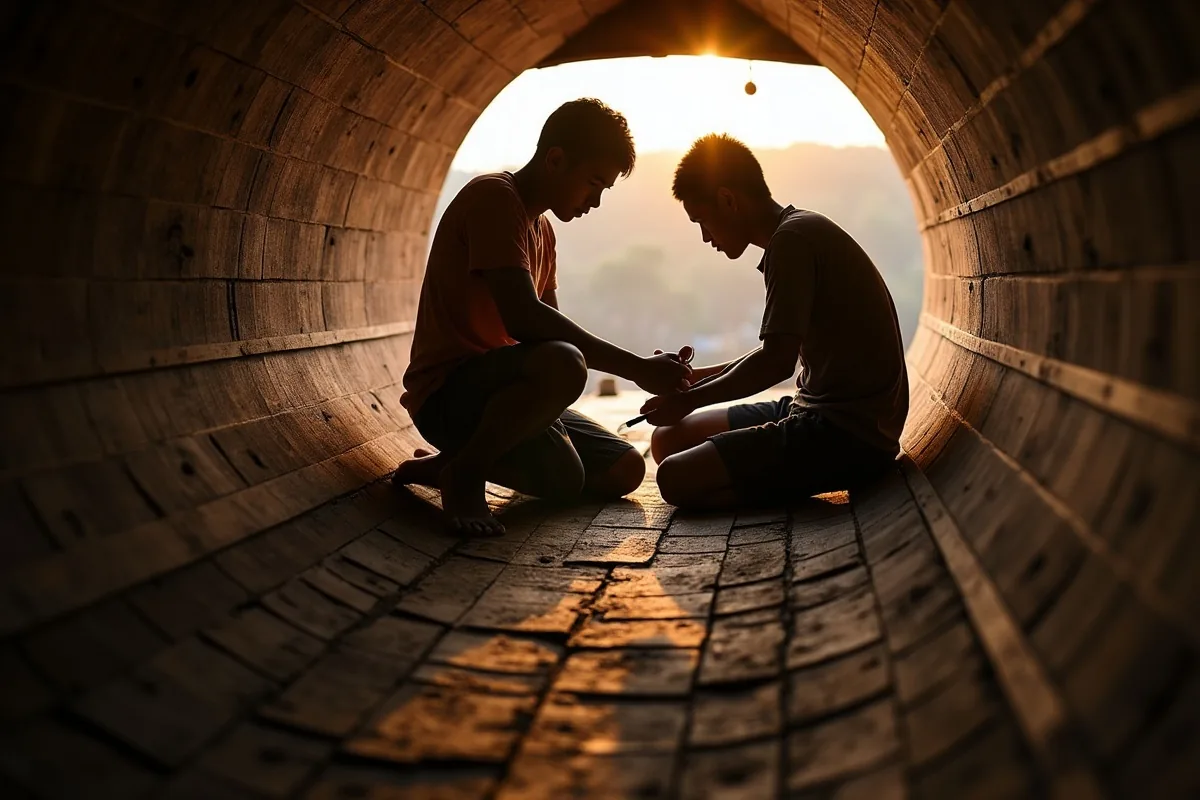
Flores boatbuilding trains its people the way it always has: by hand, in public, over years. The path runs from general labourer to caulker to planking hand to framing carpenter, and — for the patient few — to foreman and hull master, each step earned under a senior’s eye rather than granted by certificate. The system produces superb craftsmen slowly, and its throughput is now the single biggest constraint on how many boats this coast can build.
By Labuan Bajo Boat Builders Build Desk — Yard Desk, Labuan Bajo Boat Builders. Updated August 2026.
Every conversation about yard capacity on this waterfront ends at the same place: not timber, not space, but hands. Skilled hands take a decade to make. This article follows the apprentice path stage by stage, looks at how yards are modernising it, and explains why owners should care about the training culture of the yard they choose — a companion to the heritage story in Manggarai hands, Bugis lines.
Stage One: The Labour Years
Almost everyone starts the same way: carrying timber, turning drills, sweeping shavings, mixing caulking compound. It looks menial and functions as curriculum — a year of moving wood teaches species by weight and smell, grain by how it splits, tools by their sounds when used well or badly. Foremen watch constantly for the two qualities that predict a shipwright: care with other people’s work, and the habit of watching skilled hands during every idle minute. Boys who have it get called over; the rest stay labourers.
Stage Two: Caulking and Planking
The first true craft assignment is traditionally the seams: driving caulking into planking joints, where errors announce themselves publicly the day the hull floats. Caulkers who prove tight move to planking crews — spiling, fitting and fastening the hull skin under a lead hand who inspects every joint. This is where the reputation system described in warranty culture begins personally: a planking hand’s seams are known, and pride in them is the trade’s real wage premium.
Stage Three: Framing, Fairing and the Long Middle
Framing carpenters shape the hull’s skeleton from patterns and, increasingly, from lofted drawings — the point where tradition meets the naval-architecture overlay modern projects require. The long middle of the path, years four to eight for most, adds decks, houses and the fairing eye that separates a good hull from a beautiful one. Ambitious hands rotate deliberately across the zones mapped in our build-yards guide, collecting specialisations: joinery in the harbour-fringe fit-out sheds, heavy structure on the northern beaches, and now steel and composite skills as metal builds and catamaran projects arrive.
What Is Changing
Three modernisations are reshaping the path without breaking it. Formal safety training — harness work, tool guarding, coating protection — now fronts the first year in serious yards, aligned with the practices in our eco-build standards. Technical literacy is entering mid-path: reading drawings, moisture meters, laser levels, epoxy systems. And wages are professionalising — monthly pay with skill increments is replacing pure day rates in yards that want to keep their best hands off the ferry to Kalimantan’s industrial projects. The yards investing this way are the ones whose order books hold, as the 2027 outlook makes plain.
Why Owners Should Ask About Training
A yard’s apprentice culture is a leading indicator of your build’s quality curve. Yards that train retain; crews that stay together plank better together; and a build crewed by a stable team hits the milestone rhythm in the keel-to-launch timeline far more reliably than one staffed from the casual market each Monday. When you tour, ask three questions: how many first-year trainees are on site, who moved up last year and to what, and which foreman came up through this yard. Good answers to those predict good answers to everything else — and they are the human infrastructure behind every vessel in our portfolio.
The Owner’s Stake in the System
Every contract signed with a training yard is a quiet investment in the coast’s future capacity — and in your own boat’s long service life, because the hands that built her will still be on this waterfront to maintain her in her second decade. That continuity, unglamorous as it sounds, is one of Labuan Bajo’s most underrated selling points.
Talk to the Yard Desk
Our yard desk answers build enquiries seven days a week from Labuan Bajo. Message us on WhatsApp at +62 811-3941-4563 or write to [email protected] and we will reply with slot availability, reference projects and a realistic budget band. You can also review our pricing guide or start with the step-by-step build process.
Frequently Asked Questions
How long does it take to become a hull master?
Fifteen to twenty-five years. Foreman level — running a crew on structure — arrives for strong candidates in eight to twelve. There are no shortcuts, which is exactly why the title still means something on this coast.
Are there formal boatbuilding schools on Flores?
Vocational marine programmes exist regionally, and their graduates enter yards with useful theory — but hull skill is still transmitted through supervised practice. The strongest pipeline is a yard that pairs school-leavers with senior hands deliberately, which is the model we operate.
Does apprentice labour work on customer hulls?
Yes, under supervision and on supervised tasks — that is how every craftsman on this coast learned. Structural and finish-critical work is executed and inspected by qualified hands; training tasks are chosen so the hull never carries the learning risk.
Can owners support the training pipeline?
Choosing yards that train is the main lever; some owners also fund tool allowances or safety kit for first-years on their project. Ask the yard desk via [email protected] how that works on a live build.
Keep Reading
Flores Craft & Culture
Launch Ceremonies of Flores: Blessings Before First Water
A Flores launch is a two-day event wrapped around one tide. The evening before brings the blessing: prayers led by…
Flores Craft & Culture
Manggarai Hands, Bugis Lines: The Culture of Flores Boatbuilding
Labuan Bajo’s boatbuilding culture is a marriage of two lineages: the hull-shaping tradition carried east by Bugis and Konjo migrants…
Flores Craft & Culture
The Ammossi (Navel) Ceremony: Rituals of Launching a Phinisi
The Ammossi or "Navel" Ceremony is an ancient ritual integral to the launching of a Phinisi, a traditional Indonesian sailing…